
Southwest: The Model Domestic Airline
DALLAS
In 1992, Southwest Airlines found itself under the threat of a lawsuit alleging that one of its slogans, “Just Plane Smart,” was the copyrighted property of Stevens Aviation of Greenville, South Carolina. Herbert J. Kelleher, chairman and president of Southwest, took up the challenge with almost childlike glee. He telephoned Stevens’ president, Kurt Herwald, and challenged him to an arm-wrestling duel, winner take all.
The event attracted 1,800 mostly Southwest employees, jammed inside a local sports center. Flight attendants donned cheerleading outfits to encourage their hero. Herb, a lighted cigarette dangling from his mouth, flexed his muscles not with barbells but with cartons of cigarettes. Television crews from the major U.S. networks, the British Broadcasting Company, Japanese television, and the Canadian Broadcasting Company filmed the feigned struggle from the first to the last absurdity. When Herb came up second, losing the match to his opponent, it was as if Superman, the man of steel, had lost all of his powers and taken a public drubbing. But the whole drama had been contrived farce. Several days afterward an agreement was announced between the two companies, permitting Southwest, for a fee, to continue to use the slogan, “Just Plane Smart.” Even in losing, Herb wins….
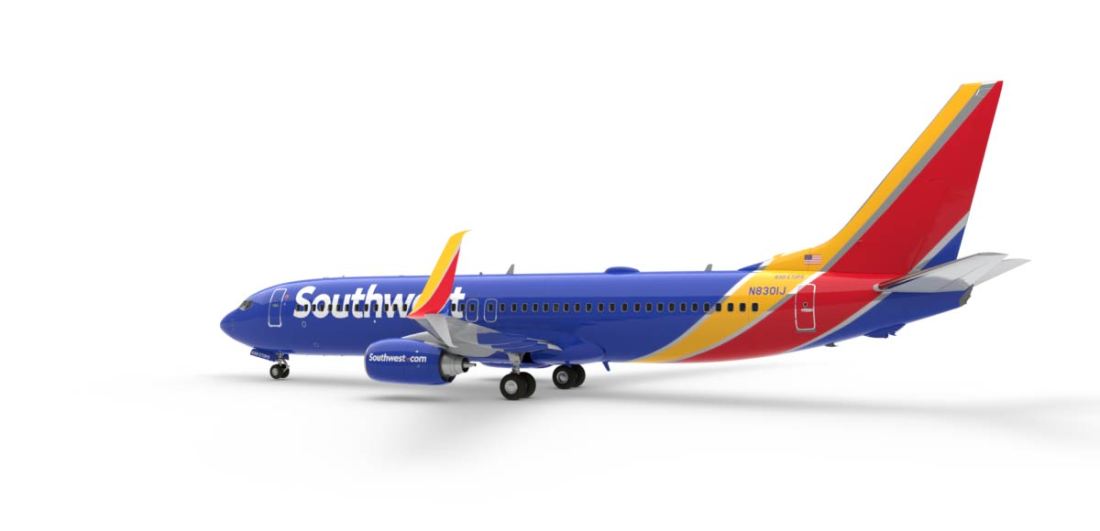 History will show that Kelleher and the Southwest founders unearthed a goldmine in short-haul flying in the United States. It is a genuine niche that others had ignored for too long. Moreover, Southwest exploited the consumers’ desire for low fares and developed a widely acceptable, no-frills style of cabin service.
Another Southwest discovery was the power of a creative work force. Kelleher and fellow executives listen to employees and follow up on suggestions. Employees are given an opportunity to transform their work into a challenging and rewarding enterprise. The final key for Southwest, particularly to its low-cost structure, has been the simplicity of its operation.
A remarkable spate of annual profits stretching back to 1973 persuaded the airline industry—big and small, poor and rich—that Herb Kelleher and company at Southwest Airlines were on to something. It took a while for the notion to sink in, simply because Southwest appeared so unlikely a candidate. It has chosen to excel in the unglamorous short-haul market. In this niche, Southwest diverts people from automobiles to fast, convenient airplanes. Southwest doesn’t fly to Bali or Puerto Vallarta. [It recently announced flights to Hawaii.] It’s an aerial bus service operated by an excellent team of employees. It sets fares based on its costs plus an adequate profit, and the costs are among the lowest in the industry. If Southwest enters a market, traffic goes up sharply and fares come down to its level.
(This article introduces Chapter Four of Airline Odyssey, published by McGraw-Hill in 1995. I co-authored the book with airline analyst Raymond E. Neidl.)
 Ramblings on Aviation, Art and Literature