
Meeting Duveneck’s Granddaughter

The 103rd regt. O.V., in the line of battle at Fort Mitchell | Library of Congress
1 print.
— Read on www.loc.gov/resource/pga.07666/
Art Triumphs Over Fate

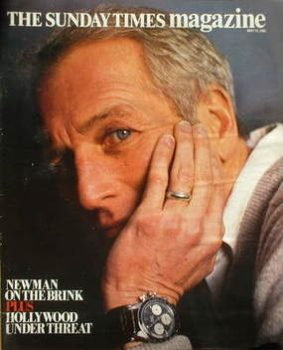
It’s true, Paul Newman was nominated for President. I was there in 1968.
Democrat Groups May Unite To Form New Fourth Party
BY JAMES OTT
CHICAGO-Divorces are usually bitter, acrimonious affairs. And a political split from the Democratic party in the wee hours Thursday morning was no different.
More than 300 dejected followers of Sen. Eugene J. McCarthy, whose crusade for the presidency had dissipated only two hours before, crowded the long narrow ballroom on the east mezzanine of the Drake Hotel and added impetus to a fourth party movement in the United States,
The McCarthys, a collection of suburbanites, college-age youths and New Left liberals, joined in a loose confederation with an assortment of minority associations and listened to pleas for unity from representatives of the already-formed Peace and Freedom Party.
The meeting was called by Marcus G. Raskin,Washington, D.C., who out of accurate pessimism of the outcome of McCarthy’s movement, put together in recent months the committee for the formation of the new party.
In a prepared released titled, “Why The New Party?” which was distributed to all-comers, Raskin said:
“Across the nation there is a general revulsion for the political parties which in reality have built their power on the interests of special groups that have no base among the people, which maintain power through war and cold war, privilege selling and the granting of favors to the few.
“Young people, workers on the line in the factory and in the offices, women, farmers, black and brown people have come to believe that the two political parties are far too deeply implicated in causing the basic problems of American society to do anything toward resolving them.
“The Democratic and Republican parties have allowed the cities to decay, encouraged and sustained a huge military establishment, supported a reckless and morally indefensible colonial war in Vietnam, and diverted the economy for wasteful and dangerous activity.”
Raskin opened the meeting for comments. Actor Paul Newman, author and commentator Gore Vidal and cartoonist Jules Pfeiffer briefly addressed the crowd. A series of speakers raked the Democrats and the Republicans and called for an end to the Vietnam war and racism in the United States.
A proposal that Newman be nominated as president was taken seriously for a few moments out of respect, but it was lost in the press of time. Raskin also heard proposals for a name for the new party but deliberations on this point were postponed.
“The new party,” Raskin said in his release, “is a political effort to avoid violence in the United States by offering a reconstructive alternative. For unless the American political progress opens up to take account of new forces which do not fit the old molds, the American people will find that mass violence by the internal police and the disaffected from all classes of society will become the basic way which people will choose to defend their interests or break of their misery.
“Although Americans are split by race, class, fear, anger and discontent, there is a growing sense that the pain which people feel individually is shared pain, pain caused politically. It grows out of a gross misallocation of our intellectual and material resources. It grows out of the destruction of the community. It grows out of the idea that the land of opportunity has come to mean a land of opportunists.
“Middle class people wonder why their streets are filthy, why they are not safe, why the air is polluted, why their cars don’t work, why highways are more important than people, why they pay high taxes for war, why they do not have adequate health services and good education for their children, even though they pay the government so much of what they earn.
“They wonder why and what happened to the 1300 billion dollars that has been spent on defense and war-making since 1945 They wonder why 100 billion dollars was spent to prop up foreign dictatorships that had no base in the people. They wonder when there will be a government that will stop the arms race, a race which the United States has been running with itself for 15 years.”
As at all political meetings, secretaries obtained names and addresses from participants. At 2:25 a.m the time of leaving as set up earlier with hotel management, the crowd moved out of the ballroom and into the streets with a new enthusiasm tinged with pessimism.
This article appeared in The Cincinnati Enquirer on August 30, 1968. At the close of the convention I was returning to my room at the Drake when I heard people shouting from their automobiles and inviting anyone to attend the “new” party gathering. I watched the proceedings by standing on a chair on the side of the ballroom. Vidal was his usual self. He reminded me of Voltaire. Newman was shorter than I expected and his hair was a mass of almost golden curls. Raskin seemed to have good intentions but looked like a rabble-rouser from where I stood.
Remembering the Really Hot Summer in Chicago, 1968
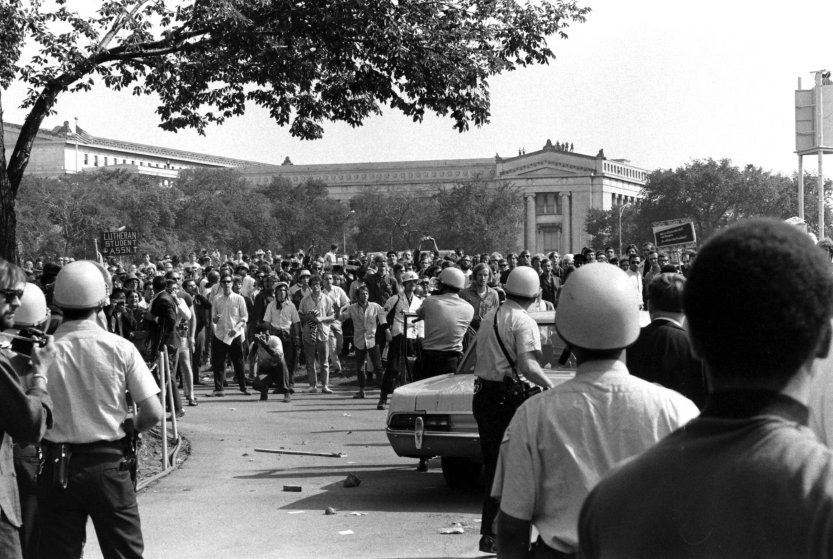
I wrote the article below for the August 28, 1968, edition of The Cincinnati Enquirer. Brady Black, executive editor, assigned me as one of a team of five reporters to cover the convention. The protests, police brutality, stink bombs, threats, and mobs represented a new low for America.
America Converges on Delegates At Chicago
By JAMES OTT
CHICAGO-Democrats from the farm, small town and big city got a first hand look at the United States Tuesday, in all of its bizarre expression, and suddenly the mood of the national convention changed from excitement to sober duty.
Perhaps the convention excitement never could reach proportions of earlier conventions, with the deadening effect of the predictions of street warfare. But delegates, many on vacation, trouped into this nation’s third largest metropolitan area with a festive air. They drank and saw Chicago’s nightlife for two days, and then, convention ’68 changed radically.
The holiday atmosphere broke late Sunday night and early Monday morning when groups of 500 to 1,000 Hippies, chased by police, charged down Michigan Avenue. The howling mob, with hair flying in the breeze and a few waving Viet Cong and North Vietnamese flags, scattered over the full breadth of the boulevard.
Seven hours of speeches and credentials fights, lasting until 2:43 a.m. Tuesday, took a heavy toll among delegates. Already their “neck muscles” were beginning to weaken, according to presidential contender Eugene McCarthy’s analogy of the nomination process and the bullfight. He said it would be “a trial by ordeal”, and he was right.
Other experiences led to the shocking realization of the U.S. today
Every day now, on rented buses, delegates leave their hotels on Michigan Avenue’s “million dollar mile,” riding through Southside’s Black ghetto. The buses rumble over the streets through the bleak stretch of onetime mudflats to the convention amphitheater.
There they see that Carl Sandburg’s city of big shoulders wears epaulets. The omnipresence of police, wearing riot helmets and holstered billy clubs, has a stupefying effect on the delegates and the press. Nowhere, except in the armed fores, do people see that many armed men, upwards of 50 policemen can be found congregating at many of the key locations around the amphitheater.
All the influences–the milling and demonstrating “hippies” the threat of black rebellion, the police and nearby presence of the National Guard and the Federal troops, the endless checks for credentials, the normal political push and pull, the lack of sleep–these influences are coming to bear on the delegates.
As one might expect they are getting skittish like so many thoroughbred horses who know that a fire is heading their way. Some observers said it had the effect of opening up the convention, the delegates rethinking their earlier commitments with a mood of possible change.
Here in Chicago the delegates are prisoners who are deluged with personal contacts and by the media who present the views of the major candidates. At no other time in the campaign have the delegates been forced into positions of a full hearing of all sides. The thinking is that it can have a radical effect.
A Discourse on the Homeless
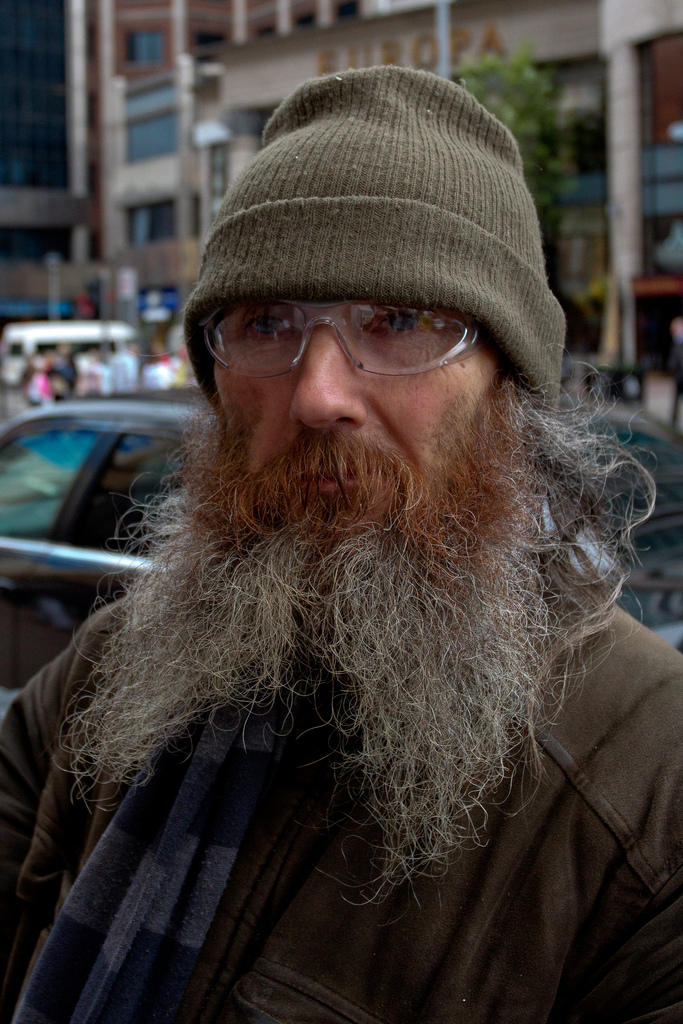
The people in this article will never read what is said about them. They only see newspapers on corner racks or hear headlines blared by some newsboy.
These people are the unwanted, misfits of society who roam the streets by day and sometimes by night. You can see them shuffling along ahead of you on the streets. They are ragged, dirty and unshaven–the lonely faces in the crowd.
Often you wonder, perhaps, where they stay at night.
The jail at City Hall is open to them. At least five or ten a night sleep on park-type benches or on the floor inside the locked doors. This is the summer group; there’s more in the winter when the nights are cold.
The jail’s not much, but it’s home to them.
A few years ago there was a man who virtually made the jail his home. He stayed there almost every night for three years. He was old, crippled and senile.
As a man, police said, he was kind and very reticent. But he had one salient failing. He never bathed. One night a police officer, who could not take the odor anymore, took him aside and told him he must take a bath. The officer escorted the old man to the shower room and saw to it.
The fellow never came back after that night.
The lodgers at the jail come from all over the country: Texas, Georgia, New York, California. Some are transients and they’re, of course, always heading for a job somewhere. These are the ones who have some spirit and pride.
A typical conversation with one of these men is this:
-Where are you from?
-Texas.
-Where are you gong?
-North, to get a job.
-A Texas wrangler, huh?
-Yeh.
He smiles with obvious pride.
Jailers started allowing a few vagrants into the jail in the 1940s. Small missions used to keep them in ‘flophouses” before that, but now their doors are closed to them too. The police do not know of one ‘flophouse’ in the city.
There is one requirement to get in: Name and hometown. The return is a roof overhead. Generally that is all. Sometimes there’s food, what’s left over from the prisoners. But that’s not regular.
The food at the jail is not what you would call rib-sticking. Coffee and bologna sandwiches–one each at lunch and supper–and a hard sweet roll at breakfast.,
The lodgers begin to trickle in about 9 p.m. and some stroll in as late as 2:30 a.m. But they all must leave by 5:45 a.m.
As a general rule, the lodgers are quiet, like the old man who never bathed. They seldom say anything other than, “Can I stay for the night?” Still more seldom do they cause any trouble. When they do, they must be thrown out, and obviously they don’t want that.
One veteran police officer described them like this: “They all seem beaten. They have no interests in life and live only from day to day. They are usually old and either physically or mentally handicapped. And they have nowhere else to go.”
A cursory glance at the lodgers’ record book shows one facet about them which repeats itself day in and day out. They are all Anglo-Saxons, at least by the names given, even among those who are just passing through.
They are Browns, Smiths, Williams, Jones, Burtons, Williamsons. But last week a “John Milton” from Tennessee registered for the night.
Lodgers range in height from tall to short, but police who have been watching them for years say you never see a fat one.
—written by the author more than fifty years ago during a year’s duty as a police reporter on assignment at Central Station in Cincinnati City Hall. The article was published in The Cincinnati Enquirer, which proudly accepted the Pulitzer Prize recently for local reporting.
A B-2 Skinned and Ready for a Coat
The Northrop B-2 in maintenance is as fascinating as it is in flight. I saw one during the maintenance process, which typically lasts at least a full year. In this USAF photograph a technician is working on the fuselage above the cockpit on a skinned-down version. The B-2 awaits a number of applications including the final layer of radar-absorbent materials, which look like a thick coat of rubber.
The B-2 Spirit is also known as the Stealth Bomber because of its low observable stealth technology. The aircraft is stealthy due to a handful of factors, including the carbon-graphite composites used in the structure, the various material applications, the angles of the flying wing design, and certain maneuvers that make it difficult for the aircraft to be identified by radar.
The USAF operates 20 B-2s. The original procurement was for as many as 132 aircraft, but the collapse of the Soviet Union in the early 1990s put a huge dent in the program. The prototype was converted, bringing the number to 21. However, a crash in February, 2008, of the Spirit of Kansas after taking off from Andersen AFB in Guam brought the number back to 20. The crew in that accident escaped. The probable cause was determined to be moisture in the B-2’s Port Transducer Units during air data calibration, which sent distorted information to the air data system. As a result flight control computers calculated inaccurate air speed and a negative angle of attack, which caused the B-2 to pitch upward 30-deg. during takeoff..
(Information on the cause of the crash comes from a comprehensive report on the B-2 in Wikipedia.)
There are 80 pilots qualified to fly the B-2s. What a crew of lucky airmen! 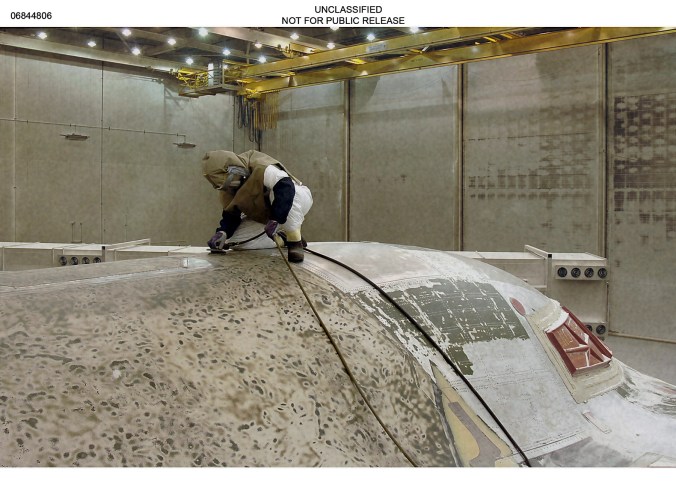
Deadline for Murder
Chapter One of a coming-of-age novel based in the late 1950s. Please read it and give me your impressions and recommendations.
Bureaucracy That Sometimes Doesn’t Listen
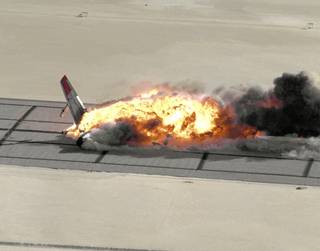
Rogers Dry Lake, Edwards Air Force Base, California: Fall, 1984
A federal agency that has made as many expensive public mistakes as the FAA must be endowed with some inner strength that keeps it going. The agency has been criticized for its dual purpose: keeping aviation safe while promoting it. But most in aviation see no conflict in the dual role. Safety is a sine qua non in aviation that few outside it can comprehend. No one, particularly the people who fly the airplanes, perceives any gain in shaving maintenance expenses at the risk of an airplane. When one is flying at near Mach 1 at 41,000 ft., this becomes a heartfelt axiom.
As for the promotion of aviation, there are no greater boosters of aviation than the people who wear wings. The FAA is, in a real sense, part of the brotherhood. But once it acts officially, the agency is regarded by aviation as the final word, the legal authority, she who must be obeyed. The agency is held in the highest esteem as a trend-setter by the aviation authorities of other nations, a fact that always comes as a shock to many in America.
The FAA blundered onto national television screens in late fall of 1984, during what became a colorfully humiliating disaster for the agency. The government project, cosponsored with the National Aeronautics and Space Administration (NASA), sounded simple enough. Britain’s Imperial Chemical Industries and the Royal Aircraft Establishment had devised a fuel modifier termed FM-9, a long-chain polymer that prevents fuel from misting into a haze of droplets. a condition that sets it up for a friction-sparked fire. The FAA had spent five years and more than $11 million on a program to improve the crash-worthiness and fire safety of jet airliners, especially in the fuel fires that can follow violent crashes. Laboratory testing showed the effectiveness of FM-9. A controlled-impact demonstration with an FAA-owned and -operated, 75-seat Boeing 720, fueled by anti-misting kerosene in its four engines, was to be the culminating test in the program. A test site, complete with ground-based steel prongs, “wing openers,” and a field of approach lights, was established on the bombing range at Rogers Dry Lake near the Edward AFB main runway.
The project had a secondary purpose of testing the effect of the crash on an aircraft structure, the passenger and cockpit seats, as well as testing the survivability of airline passengers in the controlled crash. Most of the 75 seats were occupied by instrumented test dummies, to gain data on crash impact. The Boeing 720 had been flow by remote control, with pilots on-board, on 20 previous test flights. All the bugs had been worked out, and the FAA/NASA team was nearly ready for the November 10 flight. White canvas-covered dummies were installed in the 720’s seats, starting with the first rows near the cockpit door. The company that produces the dummies exhausted their supply after installing about 50 dummies. An additional order for dummies was placed for the back of the airplane.
When the installation of dummies was resumed, an FAA official stood at the cockpit door to survey the workmanship. He found not an airplane prepared for a scientific experiment but an example of social inequality. All of the black dummies were confined to the back of the airplane! Concerned that people might get the wrong idea, he ordered an integration of the dummies. Dumbfounded workmen had to remove some of the white canvas dummies from their installed places and reinstall them at the back, to achieve a balanced mix of black and white canvas. A report on the overly sensitive FAA official and his concern for the social equality appeared in Aviation Week & Space Technology in the November 5, 1984, issue, prompting a reader to write:
All America must be proud of the Federal Aviation Administration. Its actions to protect the civil rights of the 75 instrumented dummies who will sacrifice themselves in the interests of air safety ranks as a high point in the long and arduous struggle for the equality of dummies. The next test should be less costly since there will be no need to contract for crash dummies. The FAA has demonstrated that it has an adequate supply within its ranks.
The test was postponed in any case until December 1, and it caused more red faces at the FAA when it actually occurred. The agency had planned on a descent rate for the test aircraft of 15 to 17 feet per second. The agency had disregarded a warning from the manufacturers represented by the Aerospace Industries Association (AIS) that the descent rate was too fast and the crash impact would be too severe. Confident of a publicity bonanza, the FAA invited Transportation Secretary Elizabeth Hanford Dole to appear a the press conference following the test.
On the test day, FAA personnel remotely controlled the Boeing 720 on the takeoff. It was empty of real people but loaded with instrumentation and the integrated dummies. After the takeoff and a left turn crossing south of the target area, the aircraft climbed to 2300 ft. It was turned left again to align with the runway, and the Boeing 720 began a smooth descent.But when it reached an altitude of 150 ft., the nose dropped slightly and the aircraft began to roll. The left wing was low when the Boeing 720 touched down 281 ft. from the target point at a descent rate of 20 to 22 ft. per second. The right wing was penetrated by the wing openers, and a fireball engulfed the airplane. Before a host of television cameras and members of the news media, the fire burned for more than an hour.
The FAA held the press conference as scheduled. Not surprisingly, Mrs. Dole was nowhere to be found. As the fire burned brightly, sending waves of billowing smoke into the air, a government jet lifted off and disappeared into the eastern sky. Astonishingly, much test data was recovered from the blackened hull, but the FAA’s plans for an anti-misting additive went u in smoke over the California desert.
(This article is taken from Airline Odyssey, published in 1995 by McGraw-Hill, by James Ott and Raymond E. Neidl.)
Photo by NASA
 Ramblings on Aviation, Art and Literature